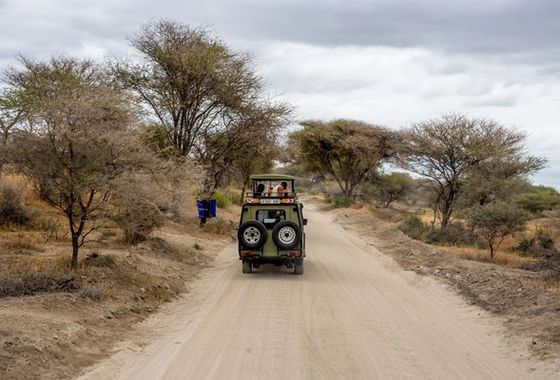
The gate opens before the sky has decided what color it wants to be. We're through in the first minutes of light, the jeep's headlamps still doing more work than the sun, and the cold has a physical weight to it — the kind that gets into your knuckles around the camera strap and doesn't leave until well past seven.
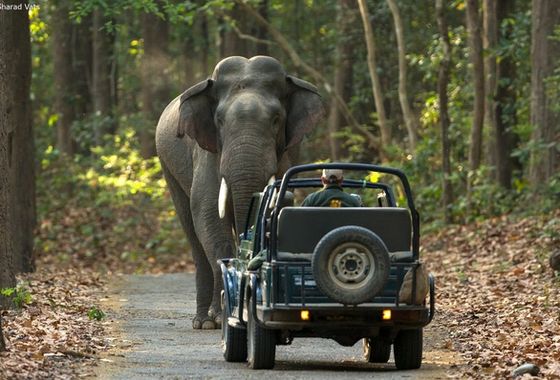
The track drops through sal forest first, trunks going up straight and pale into a canopy we can't see the top of yet. Nobody talks much. Our naturalist has the window down, head half out, reading the forest the way the rest of us read a page — langur alarm calls somewhere off to the left, filed away without comment, not urgent enough yet.
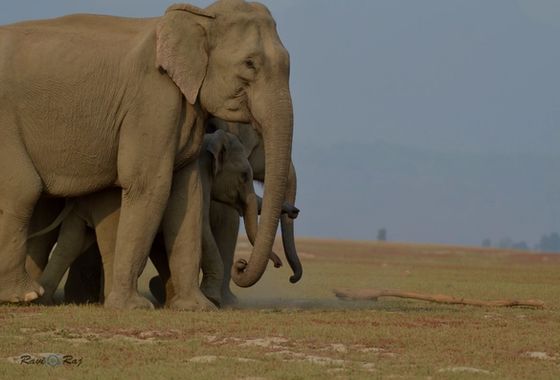
Then the trees open into grassland, and it's like someone pulled a curtain back. The chaur stretches out further than expected, pale gold grass heavy with dew, mist still sitting in the low ground where the Ramganga's channels cut through. A herd of chital moves through it unhurried, and past them, distant enough to look painted on, a line of elephants working the treeline.
We stop because the naturalist wants to listen. A sambar has started calling, sharp and repeated, from somewhere across the water — not the bored contact call, the other one, the one with intent behind it. The jeep goes still. Nobody breathes with any conviction for a while.
Nothing happens. That's worth saying honestly — plenty of Corbett mornings end exactly like this, with a held breath that never resolves into a sighting, and you learn to let that be enough. The sambar goes quiet. The elephants keep feeding. The mist starts burning off the grass in slow patches as the sun finally clears the treeline properly, and the whole chaur goes from grey-gold to something closer to bronze.
We keep moving because the drive has a schedule even if the forest doesn't. Somewhere near the river a gharial is doing nothing at all on a sandbank, jaws slightly open, entirely unbothered by an audience it's had a thousand times before. A kingfisher drops off a branch ahead of us like it was fired from something. Small compensations, and they add up.
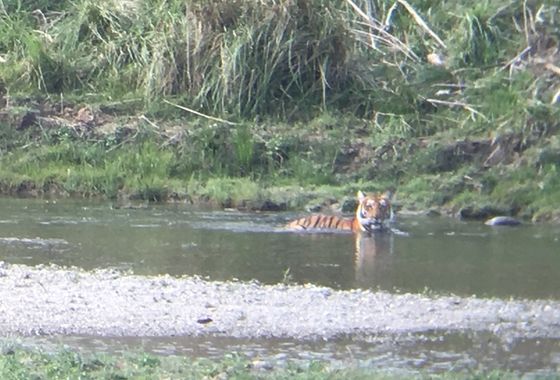
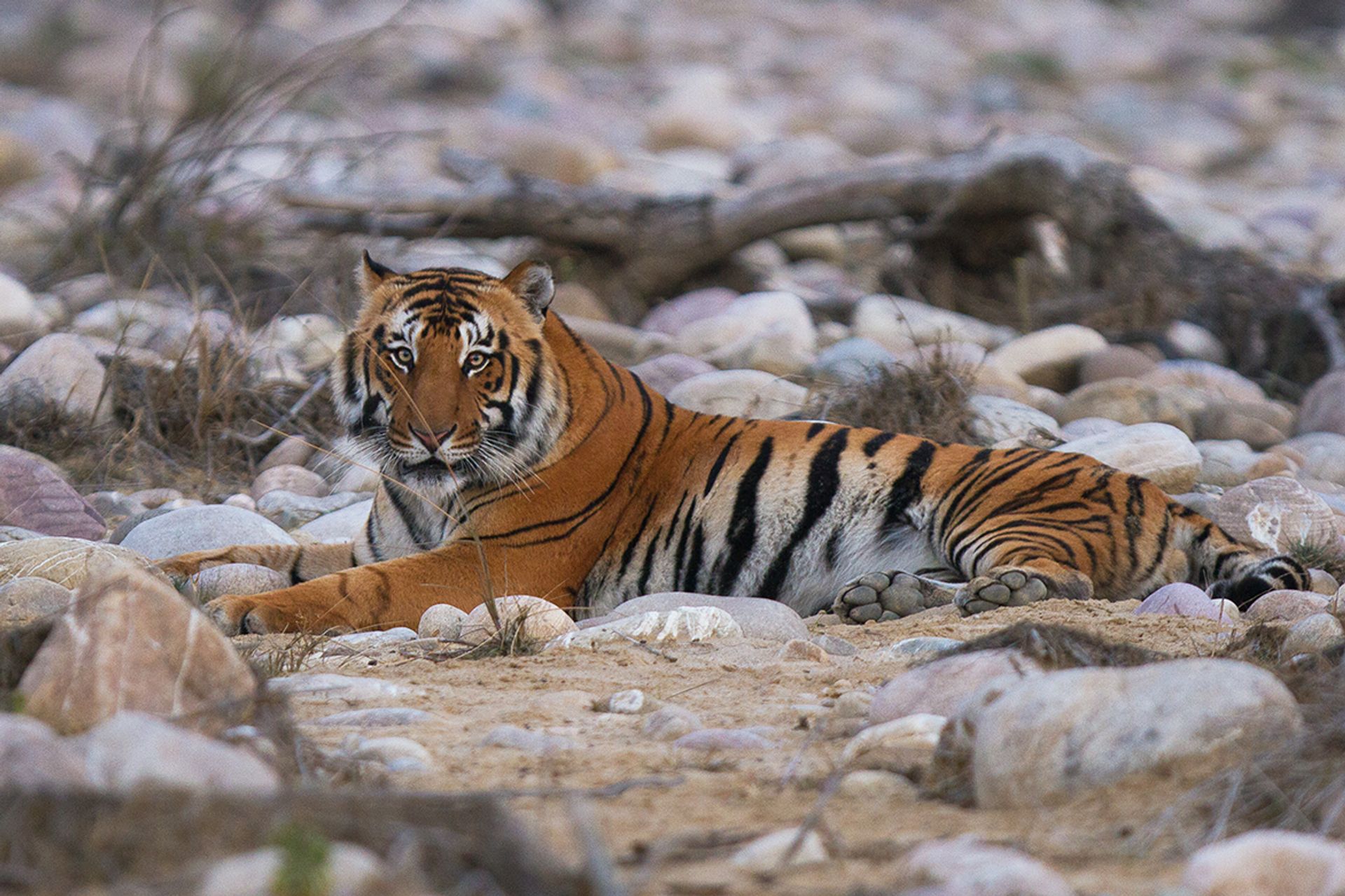
By the time we're back at the gate the light has gone properly bright and ordinary, the cold long since burned off, and the forest has that faintly disappointed look a place gets once the good hour has passed. We didn't see a tiger. We saw almost everything else Corbett actually is — and driving back out through the sal trees, dust rising gold in the mirror, that felt like the honest version of the morning, not the consolation prize.
Planning a dawn drive of your own
Mornings along the Ramganga tend to reward patience more than speed — the light is what makes the difference, arriving low and gold across the floodplain before the day heats up. If you want to book a similar drive, our comparison of Corbett's zones explains which ones give you this exact river-edge terrain.